Manufacturers across industries – from ceramics to advanced concrete – share a common challenge: mixing complex powder formulations with precision and consistency. At the heart of many of these challenges are common material handling issues like segregation, poor flowability, and blend uniformity. These issues can impact production efficiency, product quality, and ultimately, your bottom line.
With counter-current mixing action and the ability to apply intense shear forces in a controlled environment, high shear counter-current mixers offer a proven solution that delivers consistently high-quality results.
What is High Shear Counter-Current Mixing?
Not all equipment delivers the same performance characteristics when mixing complex powder systems. Lancaster Products high shear mixers utilize a counter-current mixing design, delivering a unique form of mixing action that stands apart from conventional high shear methods.
Unlike standard agitators or tumble mixers, these mixers feature a rotating pan and an independently driven high-speed mixing tool that spins in the opposite direction. This counter-rotating motion ensures all materials are constantly lifted, redirected, and exposed to shear forces. As a result, each particle—regardless of its size, shape, or density—receives consistent treatment throughout the entire batch. The advanced mixing process significantly enhances powder uniformity, preserves granule integrity, and improves process consistency. Due to its rapid and uniform mixing performance, this technology also enables shorter processing times and reduced liquid additive requirements.
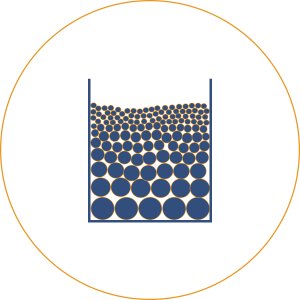
1. Powder Segregation
What It Is: Powder segregation refers to the demixing or separation of different components in a powder mixture – typically due to variations in particle size, shape, or density. This can occur during handling, transfer, or even after mixing if the equipment fails to ensure a tight, uniform bond among the materials.
Why It Matters: When heavier particles settle while finer ones migrate upward, you get inconsistent material distribution. In critical applications like fertilizer blending or ceramic mix formulation, this can lead to uneven chemical compositions, quality issues, and wasted product batches.
Common Solutions: To reduce segregation, processors may modify particle size ranges, use cohesive additives, or look to optimize their transfer process or hopper design, minimizing time between mixing and processing.
The High Shear Mixer Solution: Lancaster’s high shear counter-current mixers mitigate segregation at its root. The intense and turbulent mixing action generated by the counter-rotating impellers in Lancaster high-shear mixers rapidly intermixes particles of varying sizes and densities. This vigorous counter-current motion overcomes the natural tendency for components to segregate during or after mixing. Because mixing occurs in a controlled, high-energy environment and completes in a short cycle time, the result is a more homogeneous mixture, with all materials evenly distributed, setting the stage for consistent downstream processing and higher-quality final products.
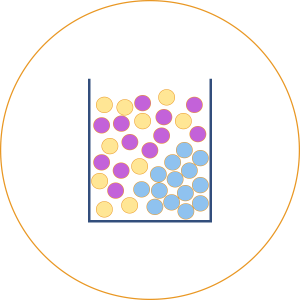
2. Inconsistent Blend Uniformity
What It Is: Inconsistent blend uniformity refers to the uneven distribution of ingredients in a powder mixture. This issue can result in some portions of a batch containing either too much or too little of a particular component.
Why It Matters: Poor uniformity often stems from inadequate mixing time, ineffective equipment design, or improper mixing sequence. When key ingredients are not evenly dispersed, the final product may fall out of spec – leading to reduced performance or rejected batches.
Common Solutions: Uniformity can be improved by adjusting mixing time, sequencing ingredient addition, using pre-mixes for minor components, and eliminating dead zones through better tool design.
The High Shear Mixer Solution: The combination of rotating pan, side scraper, and counter-rotating plow in Lancaster’s high shear counter-current mixers continuously agitates and redistributes material, eliminating dead zones and ensuring complete mixing. Because particles are pushed, pulled, and spun in opposing directions, the mixture achieves uniformity much faster than traditional mixing techniques allow. From precise, small-scale batches as low as 3 liters up to production runs of 3,000 liters, high shear mixers reliably maintain repeatable quality, regardless of batch complexity or size.
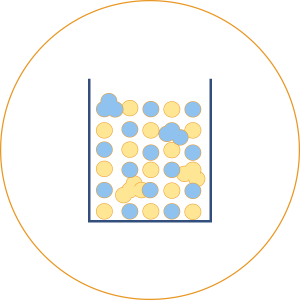
3. Caking and Clumping
What It Is: Caking refers to the formation of hard lumps in a powder, often caused by moisture absorption or long-term consolidation. Caking can also mean the unintended build up of powder particles on the side wall of a mixer or tooling.
Why It Matters: Caking and clumping can result from factors such as moisture, electrostatic charges, van der Waals forces, particle interlocking, or chemical reactions. These conditions lead to poor dispersion, uneven texture, and equipment blockages – ultimately disrupting production and product quality.
Common Solutions: Processors typically manage these issues by controlling moisture levels, applying anti-caking agents, modifying particle properties, optimizing storage environments, and implementing proper mixing techniques.
The High Shear Mixer Solution: Our high shear mixing technology actively breaks apart these lumps during processing. The shear forces generated are strong enough to break down existing agglomerates while also preventing new ones from forming by rapidly dispersing components and eliminating localized concentrations that often lead to caking. In many cases, the thoroughness of Lancaster’s counter-current mixing action reduces the need for added moisture or binders, minimizing the risk of caking while still producing a uniform, free-flowing blend.

4. Poor Powder Flowability
What It Is: Powder flowability refers to how easily a powder moves through hoppers, feeders, or conveyors. The inability of a powder to flow smoothly and consistently can result from a fine particle size, irregular shape, elevated moisture content, strong interparticle forces, or consolidation during storage.
Why It Matters: Flow issues can cause uneven mixing, equipment blockages, inconsistent dosing, and packaging difficulties – disrupting operations and reducing process efficiency.
Common Solutions: Improving flow typically involves granulation, the use of flow aids, moisture control, mechanical agitation, and optimizing particle shape and size distribution.
The High Shear Mixer Solution: High shear counter-current mixers enhance flowability by creating a highly homogeneous mixture. When a minor, free-flowing component is included, the mixing action helps ensure it is evenly distributed throughout the blend, enhancing the overall flow characteristics. The intense mixing process can also assist in deaerating powders and breaking up consolidated material, which may improve flow behavior. However, for powders with inherently poor flow properties, microgranulation can promote free-flowing/dust-free powders.
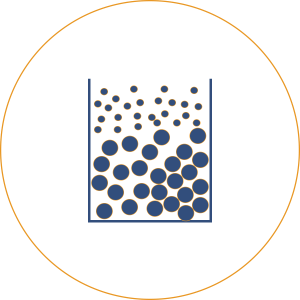
5. Dust Generation During Mixing
What It Is: Dust generation refers to the escape of fine powder particles into the air during mixing or handling. Commonly caused by open transfer, improper sealing, high-energy mixing, or inherent dustiness, this not only leads to product loss, but it also presents safety risks.
Why It Matters: Airborne dust can cause cross-contamination, respiratory hazards, and—in the case of certain organic or metallic powders—even pose explosion risks. In regulated industries or cleanroom settings, dust also increases cleaning and maintenance demands.
Common Solutions: Dust control strategies include sealed transfer points, dust collection systems, binder application, and converting fine powders into granules to reduce airborne particles.
The High Shear Mixer Solution: High shear counter-current mixers are commonly operated as enclosed systems with tight seals, which helps limit dust emissions during processing. The latest K1 Lab and K2 models build on this advantage with an upgraded PTFE seal design that extends seal life, improves dust containment, and simplifies cleaning between batches. In addition, the mixers’ rapid and efficient counter-current action reduces overall processing time, limiting the opportunity for dust generation. In certain applications, introducing liquids directly into the powder bed under controlled conditions further helps bind fine particles and prevent dust from becoming airborne. Together, these factors contribute to a cleaner production environment, reduce material loss, and support safer, more efficient operations. The enclosed mixing pan also minimizes dust compared to other mixers.
Process Powder More Effectively with Lancaster’s High Shear Mixer
From caking to inconsistent flow, powder handling presents complex challenges – but they’re not unsolvable. Lancaster Products high shear counter-current mixers offer a comprehensive solution that addresses these issues at their source. With short mixing times, intense particle interaction, and multi-directional flow, these mixers help manufacturers gain more control over their formulations, streamline production, and maintain consistent product quality.
Whether you’re looking to prevent segregation, reduce dust, improve flowability, or achieve a more uniform blend, Lancaster’s high shear mixing technology offers a reliable, performance-proven method for any mixing challenge.
Ready to improve your powder processing?
Explore our lineup of high shear mixers and discover how our technology can support your goals for quality, consistency, and efficiency. Contact us today to speak with an application specialist and learn how Lancaster Products can help you solve your toughest mixing challenges.